Art Crew Management
The Dream
The rental truck arrives with two people in the cab, giddy and eager. They park in the spot we saved for them, hop out, and open the truck gate. The art crew has been waiting for them and starts to chat and load in bins, boxes, beams, and labeled bags of soft stuff. Since we're at someone's place, they offer everyone snacks and drinks. More teammates arrive as we go and our numbers swell to a dozen. Three people inside the box truck play tetris together, deciding how to efficiently pack it all in, and what should come up next. Their orders are relayed to the loaders outside who gather items from the other arriving vehicles. Music is playing, people are excited, and it's all coming together!
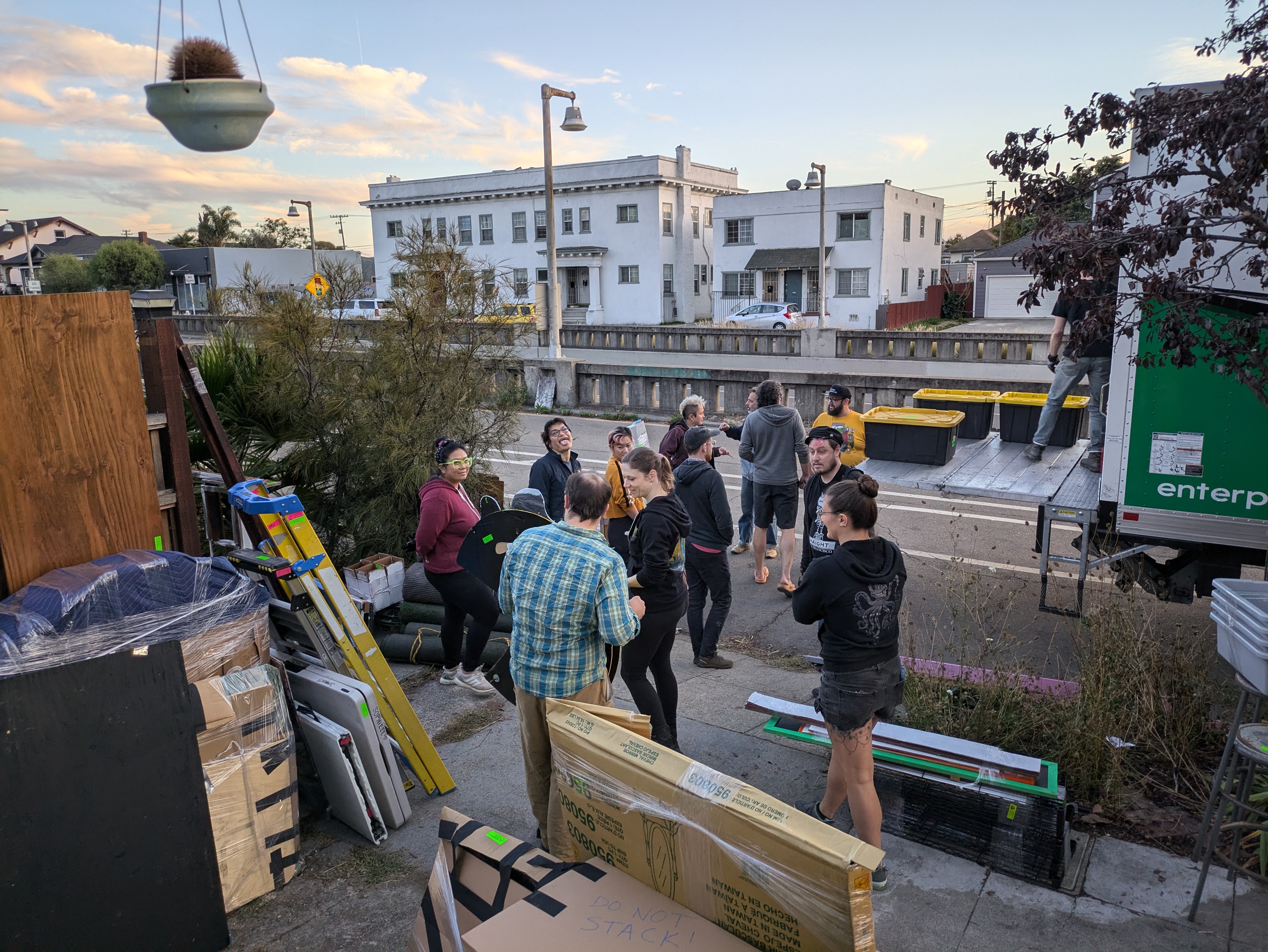
From the outside, it just works. This is every truck load for every festival. Just another operation for an established crew. It can be quite attractive! Where do I sign up? How do I jump in?
Getting here takes a lot of work. Many things have to go right for people to feel motivated, friendly and energized. For the art to be ready to go, clearly labeled, and packed in containers that can handle hundreds of pounds, stacked neatly. For most people, it feels like serendipity.
The Issue
Art crews can be great fun, but getting them together and functioning requires social engineering that most of us stumble into blindly. By recognizing the specific skills and opportunities to nurture the team, it's possible to make the group last longer, have more fun, accomplish bigger things, and burn through leads more slowly.
There is a secret job to be done: to labor behind the scenes so that things "just work," the group is happy, the project is doable, and the outcome is exciting.
All too often, the secret job gets bungled. Perhaps because no one sees it, or maybe no one has the energy to do it right. But, sadly, most groups don't survive their first project. Often the friendships that brought the team together take a beating as mismatched expectations, surprise disappointments, and emotional entanglements turn fun into suffering. Teams that do last usually burn out their core contributors by making them do too much, complaining about them rather than helping them, and ignoring their personal boundaries around sleep, personal space, career, or emotional work.
Eyes on the Prize
The Bay Area art party demimonde is competitive. That means failure is always nearby.
- People can always leave for the next thing, and are usually more excited to do that than to invest in the current thing.
- It's socially rewarded to complain that whatever is in reach is boring and basic; it lets the speaker imagine they're really special. The grass is greener elsewhere, they say, while they refuse to care for the grass at their own feet
- Most quality events are exclusive and you won't even know they exist until grant opportunities close.
- Art funding comes in grants, which are awarded competitively, and vital to keep the team together.
These competitive forces can keep you down, stealing your team and locking you out from opportunity. Or, winners can rise up on the magical energy of a convivial creative community, enjoying great success and live with child-like wonder, a strong sense of purpose, and tons of fun.
This essay covers the work of management, which here means techniques to get results from the team overall. This text shows many ways to motivate people and set them up for success, drawing from management consulting, surveys, and years of experience organizing art crews.
I chose to split out the emotional work of leadership to its own essay. There's a lot to learn there, but this paper is quite long already! Feel free to skim for the parts that feel relevant to you.
The Secret Job
You thought you were pursuing your interests. You found some cool ideas and want to play with them. You like your friends and want to engage together as your creative selves, imagining and bringing things to life that are delightful and touch souls.
But here's the issue: you need a boss. There is social engineering work to be done, and whether you do it, someone else does it, or you divide it up, it's as fundamental for your growth as gardening is for a garden.
The social engineering is a secret job you probably never signed up for, but now you'll see it right there needing to be done.
This job requires matching talent to motivation, and plugging that into opportunity. For example, someone with good fine-motor skills should paint your signs. Someone with shaky hands should not. By default, most people are too heads-down chasing the ideas that motivate them, and they miss the secret job until it's too late.
The secret job requires attention to results. Most people let results slide. For example, they say, "well the front door didn't get built, but we don't really need it to have fun together!" And that's true. And you can excuse anything like this. But, soon you don't have any project at all. Having high standards is work (establishing them, maintaining them, communicating them, enforcing them)
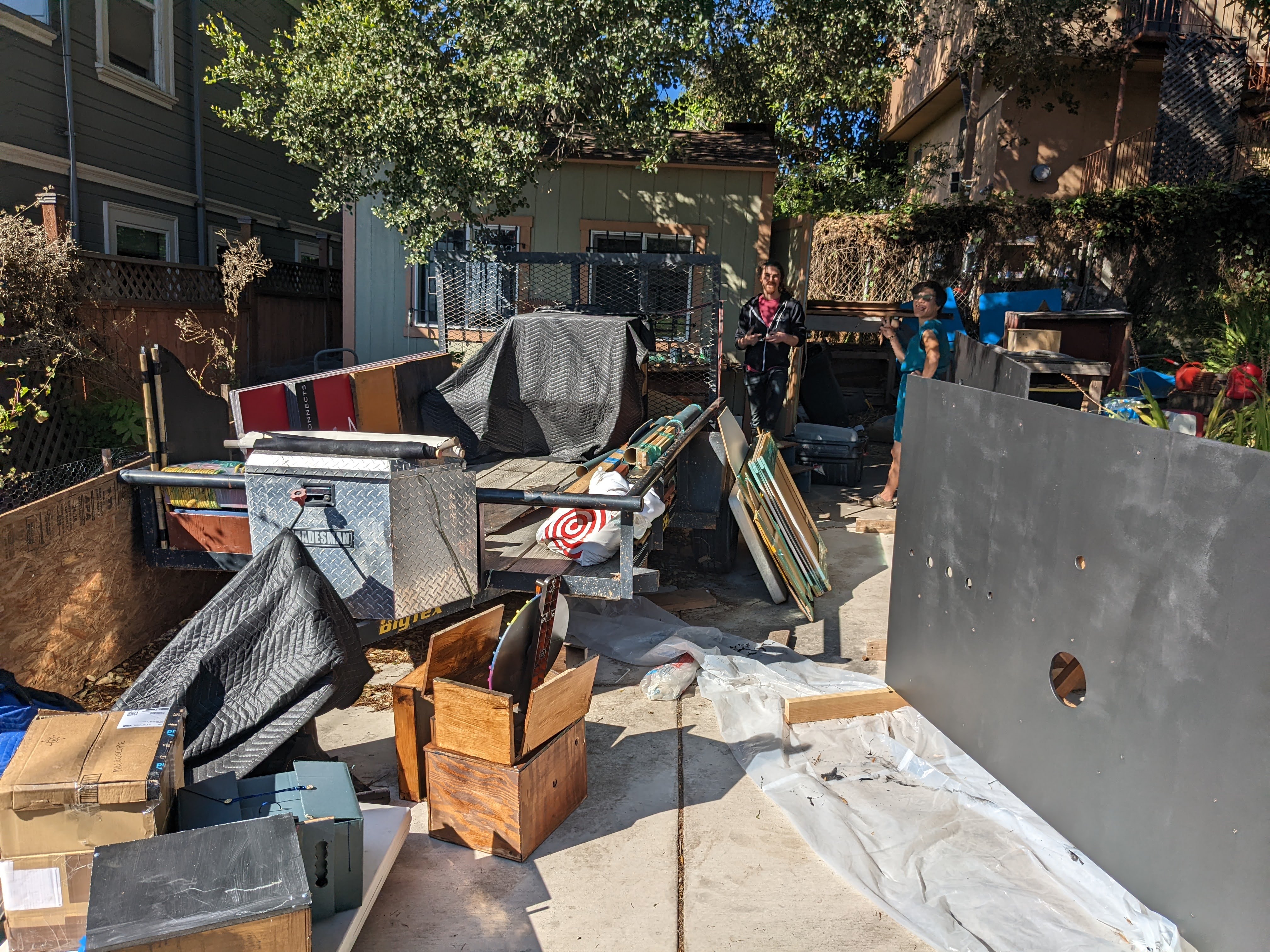
The job requires accepting that your own productivity is actually less important than the productivity of the team. You can focus on yourself, so your outfit is stellar and personal contribution is great. But what happens in the meantime? Will the project have any lighting at night? Will you have a sign so people know you exist? Will you open on time? Will it collapse at the first gust of wind?
Caring about all those things is the secret job. Someone has to care about the group outcomes, and if you are reading this essay, that someone is probably you.
Can't you just ditch the responsibility? You can share it. Or, maybe, you can forget it and let the group crash slowly. You can probably find another group, or another activity, or another adjacent community. You can ignore results.
But results do matter. Delivering a project that people notice, enjoy, discuss, and remember matters. It builds the group reputation, as people want more. It attracts talent, as other people decide they want to do stuff like what you did. It gets you resources, as organizers want to invest in your team. It gets buy-in when you pitch new ideas. It makes a rewarding and tangible good thing in a world of bad things, and you and your team are there to enjoy it.
Opportunities
Once you accept that this job exists, the question is how to do it better. There are many kinds of opportunities and I am always seeking out new ones.
Sandbox vs Scripted
What kind of project will you take on? A highly stressful one with no margin for error? Or a loose one, with lots of space for the unpredictable? The scripted project has one script and, like an arch, all parts support must hold together. A sandbox project has a container with many toys inside.
Scripted
A scripted project has one vision and each part supports that larger vision. If one part is broken, it's likely that nothing works. A theatrical production or rollercoaster are examples.
When someone wakes up to the possibility of festival art, they almost always pitch scripted. Their idea usually involves dozens of people working in perfect harmony to produce a singular vision (usually from the creator's childhood), in the most expensive and unforgiving medium possible.
Scripted projects aren't necessarily bad, but they are stressful. They can also be the most impressive, when everything is working right. You'll need your collaborators to play workers, more than artists, and usually the artistic director has to bankroll the operation to make people fall in line. Your audience usually has to be processed in small groups, so they can get the whole script from top to bottom, and that means people wait in line for the project. The line means you get less throughput, which makes your offering less valuable to event organizers, and reduces how many people can see your offering and talk it up to their friends. It's an ego boost though, which can benefit the team.
From what I've seen, this format tends to be more stressful on the crew, burn out leads, and break up groups of friends. Crews that stick with this format do a ton of management work to share the load.
Sandbox
A sandbox project has a loose premise and many standalone parts. If one part sucks, ignore it. A museum or playground are examples of this format.
When someone wants to do a little project, and they support it with a bit of infrastructure (such as lighting), they usually make a sandbox where someone else can add another little project. By accreting many little projects, you make a wonderful zone, more like a neighborhood than a show. The first Burning Man theme camp was just Christmas themed: any camper bringing any Christmas stuff could make the whole zone better. Cookies, ornaments, reindeer games. Your audience will identify the winners and focus attention on them.
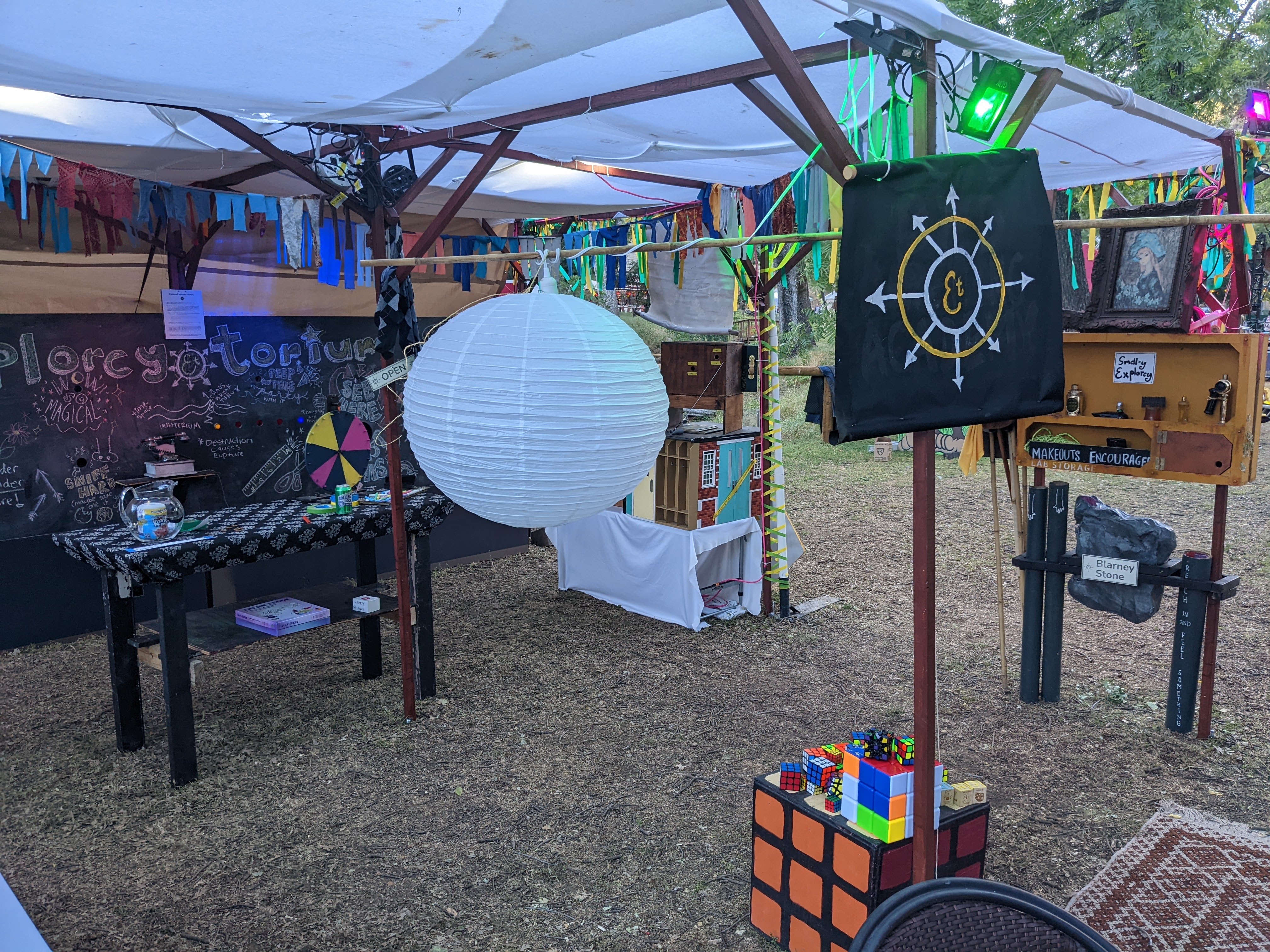
Sadly, these projects may be underwhelming, because the viewer looks at one project after another and may give up if the first few things they check out aren't that cool. You can win here by keeping a high bar for quality, making the area itself nice to be in (with seating, shade, snacks, nice music, and other basic hospitality). As you accumulate people hanging out, the area attracts even more people, via social proof. Once people are just standing around anyway, they have ample time to soak in your offerings.
Management costs are much lower for a sandbox, and I would suggest everyone start here. A "birthday room" experience is a good example: bring anything that would be at a birthday and you're set. If you want to do a disco ball, a cake sampling station, throw cakes, or sing the birthday song to a lobster, it all works.
The Psychological Levers
This section is all about willpower transfusions. Why don't people naturally organize with each other about their needs? Plan meals, lock in lighting solutions, cart around gear? Why don't they spontaneously plan their own party and bring their own great food and drinks to a cool venue they rent together as a group?
In a sense, they lack the willpower. They "don't have the spoons" and you can help. You put in some of your willpower, so that they have more willpower. You don't do this by yelling; you do it by sophisticated peer pressure.
Put your effort into the team so it becomes easier for others to put their effort into the team. Act really excited about a project to help them feel excited. Cook them dinner so they can be focused, energized, and feel included; now they can offer up willpower to the group. Throw a fundraiser to bank money, then use it later to provide magical discounts to get them to say Yes to an event in the future.
But wait! If you are spending 1 unit of your own willpower for 1 unit of theirs, this tactic won't get you far. That's why you have to find leverage. Look for the levers where you can put in 1 unit and get back 2.
Avoid tactics that cost you 2 units and only get you one back! For me, having a long chat with someone about their hard feelings during a scheduled workday blocks me from other contributions and often doesn't help them feel better. I have poor leverage comforting people! For other people, talking about feelings is preferable to most art work, and they are good at comforting people! Find your own best leveraged opportunities, and avoid the ones that are too draining.
Spending your willpower is stress. You can only take so much stress. Once you see the secret job, you may be tempted to overachieve, by piling on the stress. But if you do this, you'll burn yourself out and resent your friends, get mean, and have less energy for future projects together.
By the way, don't tell them what you're doing. I find this confusing, but if you lay bare your manipulation, it becomes ineffective. This is why people who are oblivious to their manipulative behavior are so successful at it; they always explain their actions with misdirection. So don't say, "I'm acting excited to get you to act excited." Instead say, "I'm acting excited because this means a lot to me personally right now." Don't say, "we're throwing a fundraiser to get you to say Yes to events later by offering you the minimum viable discount to get your over the line." Say something the feelings oriented people would appreciate, like "for the love."
Workday Food
A great opportunity. People won't tell you they need food. When I didn't handle food, some would show up hungry and leave to grab dinner, others would order delivery and pay a lot per person, while the rest felt confused and hungry watching it all go down. Big mess of bad vibes.
Solution: Just feed them. The goal is to offer decent food for vegetarians and non-vegetarians. Try to minimize the burden on the host, feed the workers, and keep costs low. A $50 stipend for the host to provide food works pretty well, and encourages them to plan ahead, which is key.
I sacrifice hours to food prep instead of making art, but the productivity of the group is more important than my own productivity. You can extend this principle to much of hosting, such as setting up good workspaces, music, lighting, and providing drinks. The manager's job is to create a fertile environment where work can happen.
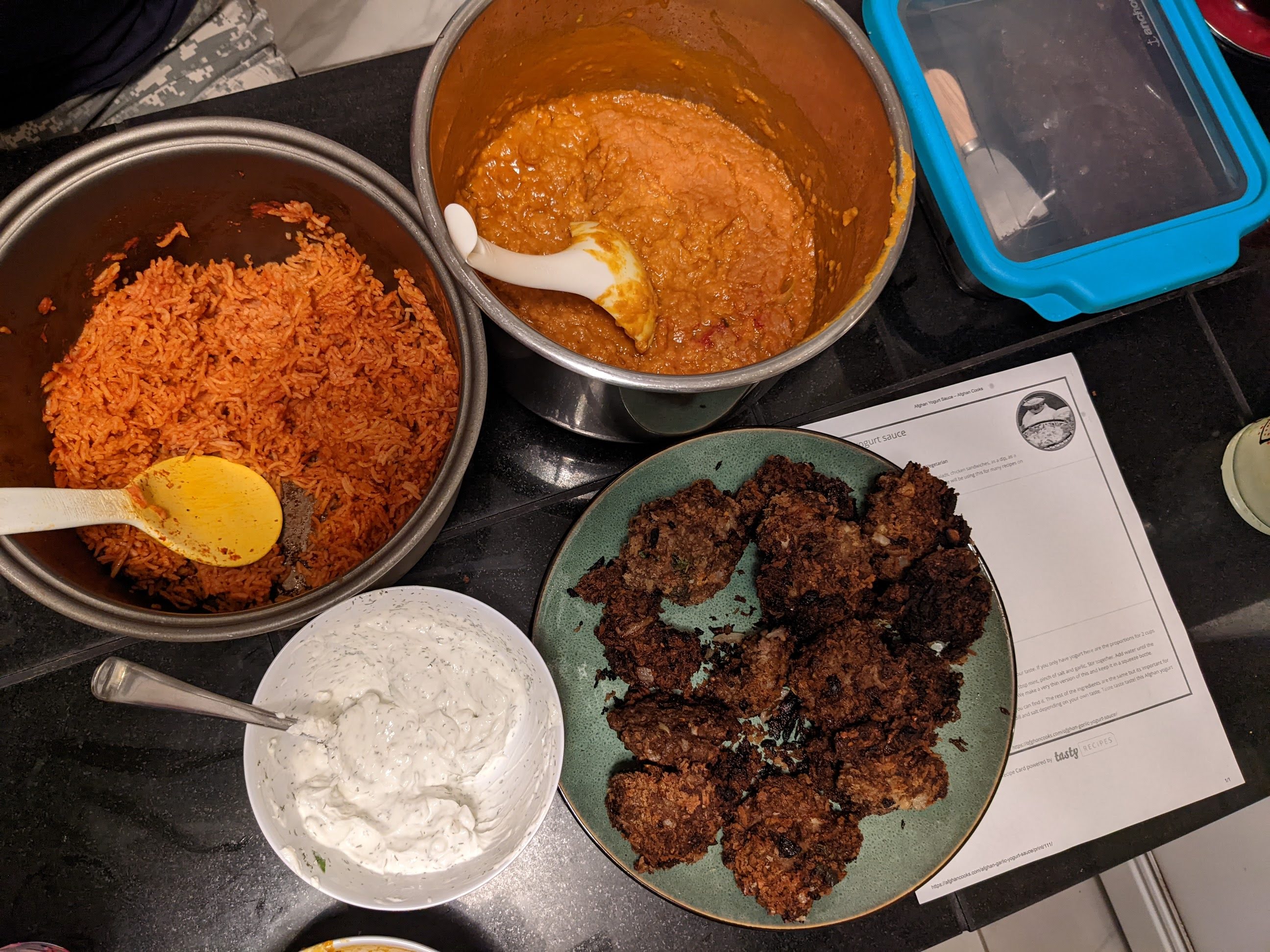
Some meal concepts that work:
- Tuna Helper is like Hamburger Helper but tuna is cheaper and has no red meat!
- Hamburger Helper with Beyond Beef is decent food too
- Bag Salads are affordable and scalable
- Lentils and rice
- American Taco Dinner: ground meat, tomatoes, lettuce, shredded cheese, corn tortillas, beans, salsa. Easy!
- Trader Joe's frozen foods
- Pasta works well. Pesto is popular, but you can dress up a red sauce with parmesan and capers.
- Chili
- Soup works great, but you have to start early
- Frozen chicken thighs: straight into oven, cook most of the way, cut up and flavor, broil
- Corn muffins: cheap and easy, dress up into savory cheese treats or sweet cranberry friends
- Brownies: classic, everyone likes them
- Frozen spinach with white beans: healthy, cheap, scales. Start with garlic, add cumin, salt, and other spices, then the spinach and beans. It's ready soon and can be quite good!
- Order Pizza only as a last resort! People get fed up quickly and it's not that cheap. Great for truck load.
Food also matters on-site! Make sure your team has good access to satisfying food. This depends a lot on the event, but try to appoint a lead for this and support them with infrastructure (such as a cooler and microwave). Good food leads are hard to find, so be extra nice. Always retain talent!
Money
Talk about doing a cool project at a cool event and it's all enthusiasm … until people think about the cost.
"That ticket price is too high."
"A team I worked with before gave us free tickets and free meals!"
"Why would I work so hard for nothing?"
They don't say, "please scramble my brain into thinking the money isn't a problem," but as businesses have learned over the millennia, that's basically the move. Remember, this is all willpower transfusion, but now via money.
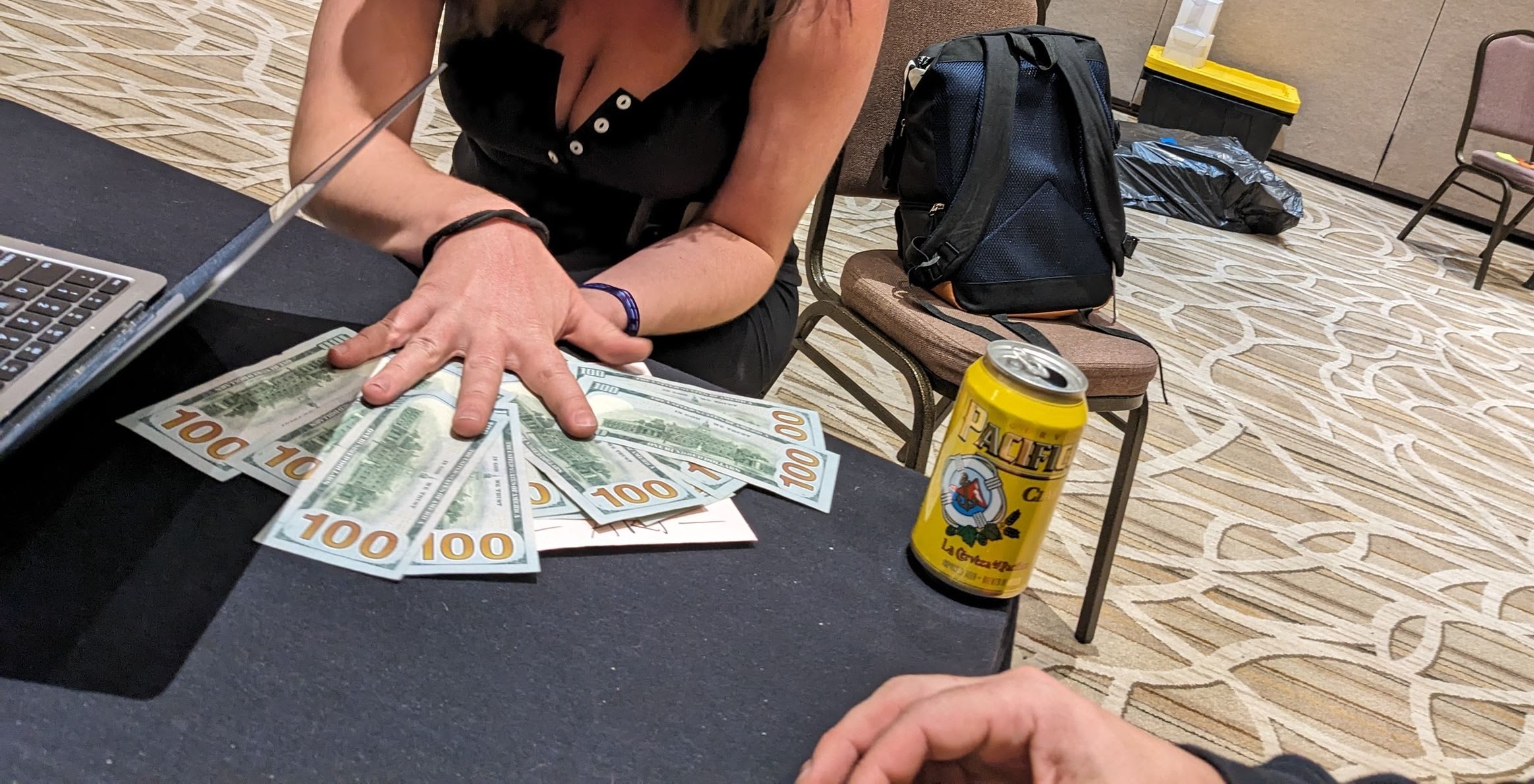
The main ways I have handled money better are:
- Apply for grants. The paperwork is stress, but your payout is money, location, and other resources. Your team will benefit from these. See the grant as a way to get money, and don't sweat the small stuff about exactly what your project will really be or what the art really means. You just need to convince the event organizers that you will make their event better. Experiment across events to probe the market and see what works. If you know the organizers, and they don't have a grant system, you may be able to open with an offer like "we'd love to bring a big installation if you can get us money for a rental truck." They don't want to manage the truck because it's stressful, so you are making a compelling offer to expand their event offering without stressing them out!
- Fundraisers. These are a ton of work and can make money, but it mostly depends on the market. If you compete with many other events, you will lose money. If you can claim a compelling date, like Saturday of a 3 day weekend, and there aren't any similar events happening, you can do extremely well. Prioritize the profits, and use this to establish your "war chest" which can provide bits of money across the year.
- War Chest. Donations, fundraisers, grants, and any other income goes here. The war chest is your team's free-floating bank account, maintained across events and particular projects. This gives you agility and lets you make your best financial decisions.
- Free tickets. Depending how many tickets you can get for free and how many people you need on the team, you may be able to get everyone a free ticket! For people who say "I want to go, but the event is so expensive," the free ticket makes your team and community happier. But if someone doesn't need the ticket, giving it to them is a waste.
- Discounted tickets. This can feel tacky, because no one likes "come out to dinner with me; I'll cover 25% of your bill." But here are two good methods. First, "everyone gets a $100 ticket" rather than paying full price, such as $326. Second, "ticket sharing" lets you say "we got 8 free tickets and have 12 people on the project, so everyone gets ⅔ of a free ticket." The work of proposing this scheme, tracking money, and transferring it around? That's the secret job of making the whole project work, and if you do it you can have a stronger team and better outcome. Treasury is a great job to delegate, so you spread the stress across many people and many coping systems.
- Reimburse receipts. The events fund art this way for tax reasons, so many groups copy it. On the event side, you can claim "we made $100 on tickets but spent $100 on bathrooms," then pay $0 taxes because there's 0 profit. For an art crew, you might not be able to claim the tax deduction, but you can still pay people back for the stuff they bought for the project. It sounds fair enough! Ultimately, this policy will ensure that whoever spends the most on their art (usually the electronics person), gets the most money back. I'm still unsure about the electronics example, but reimbursing receipts is a great way to encourage everyone to impulse buy random thrift store finds that are perfect for the project! And those are often a great deal, so you're winning here.
- Charge dues! This is a different approach, but can work. Pitch the benefits of being on the team, then charge everyone money, be sure to collect it, and use that money to cover big ticket costs such as transportation and infrastructure. This can help with art costs, but usually people resent paying dues to finance art, so you have to prove it's for toilet paper and other non-controversial essentials.
Coupon Psychology
Beyond the basic finances of the crew, there are further financial opportunities in the realm of discounting.
We bring art to events that charge money for tickets. The ticket, the parking, the transit costs, the storage costs of the art before and after, and the materials all cost money. Quite often, people will be on the fence about this! "I want to come, but it's kind of expensive…"
Consider the magic of discounts. They won't work for everyone, but, across enough people, the law of large numbers predicts many of them will accept the tricks that work on average consumers.
- Endowment effect. Like a 100 day mattress trial, first get them used to the idea that they are onboard, then you can get into more details about the costs later. This works better than being totally upfront about all possible costs. (Exception: I sometimes warn that we cannot cover all costs to avoid them begging for help later. This does reduce their commitment earlier.)
- Urgency/FOMO. Give them a limited amount of time to commit, rather than letting them decide later. Events do this by selling out subsequent ticket tiers, but there are lots of deadlines you can introduce on top of this. "Only 10 spots left!"
- Social Proof. Other people thought it was worthwhile. This is where reputation comes in: ideally you don't have to convince them of this because they've already seen other people satisfied by the experience of participation. This ties into reputation which could be its own essay, but think of it as marketing and brand. You want it, it takes work, keep your reputation strong.
- Decision Fatigue. Too many choices becomes exhausting for most people, so give them a clear and simple path so they just have to say Yes and maybe make one or two small choices. Do not ask them to dream up their own contribution at the beginning or ask them a lot of questions about their preferences all at once. Some people are exceptions to this rule, and that's more my style too, but most people want to follow the pack.
- Loss Aversion. People are usually more motivated to avoid losing than to actually gain, which is why we frame payments as discounts to begin with. "Want to come out to Yeti Fest this year? Ticket costs $420, but we'll pay you $200 if you help us with the project." Instead we say, "team members get half-comp tickets."
Psychological Ownership
Another idea from consumer psychology: the feelings of ownership are primal like the behaviors of a territorial animal. If you can make your team feel like they own the project, they'll do better work. Like all the ideas here, you can see other groups doing this around you, and while you may find it manipulative to do this intentionally, other groups do it whether cognizant or ignorant.
Try to make your team feel ownership of the project. Avoid telling them "that's not what we're doing" or "we don't have space for that." Focus on the feeling that whatever we've agreed to is ours and they are part of the team. Really, they will show up trying to push the project in the wrong direction or asking for space you don't have, but you've got to use your social skills! "That's not where we're headed" or "that's not how we decided to share our limited space."
To instill feelings of ownership, people often don't need actual control. You can get them onboard by having them feel values alignment and belonging. (I don't personally relate much to belonging, but it's a big motivator for many people.) Ideally, they will choose to identify as a member of the crew on their own. In gangs, the norm is hazing: members choose to get hurt as a sacrifice, which creates an endowment effect: "I suffered for this, so I'm invested in it."
The payoff here is that, when they feel ownership, they will talk up the team more (reputation), sacrifice more for group success, and ignore competing offers from other groups. Crazy, right? But it makes sense for a territorial mammal to do all this to defend its hunting grounds or its pack.
Appreciation
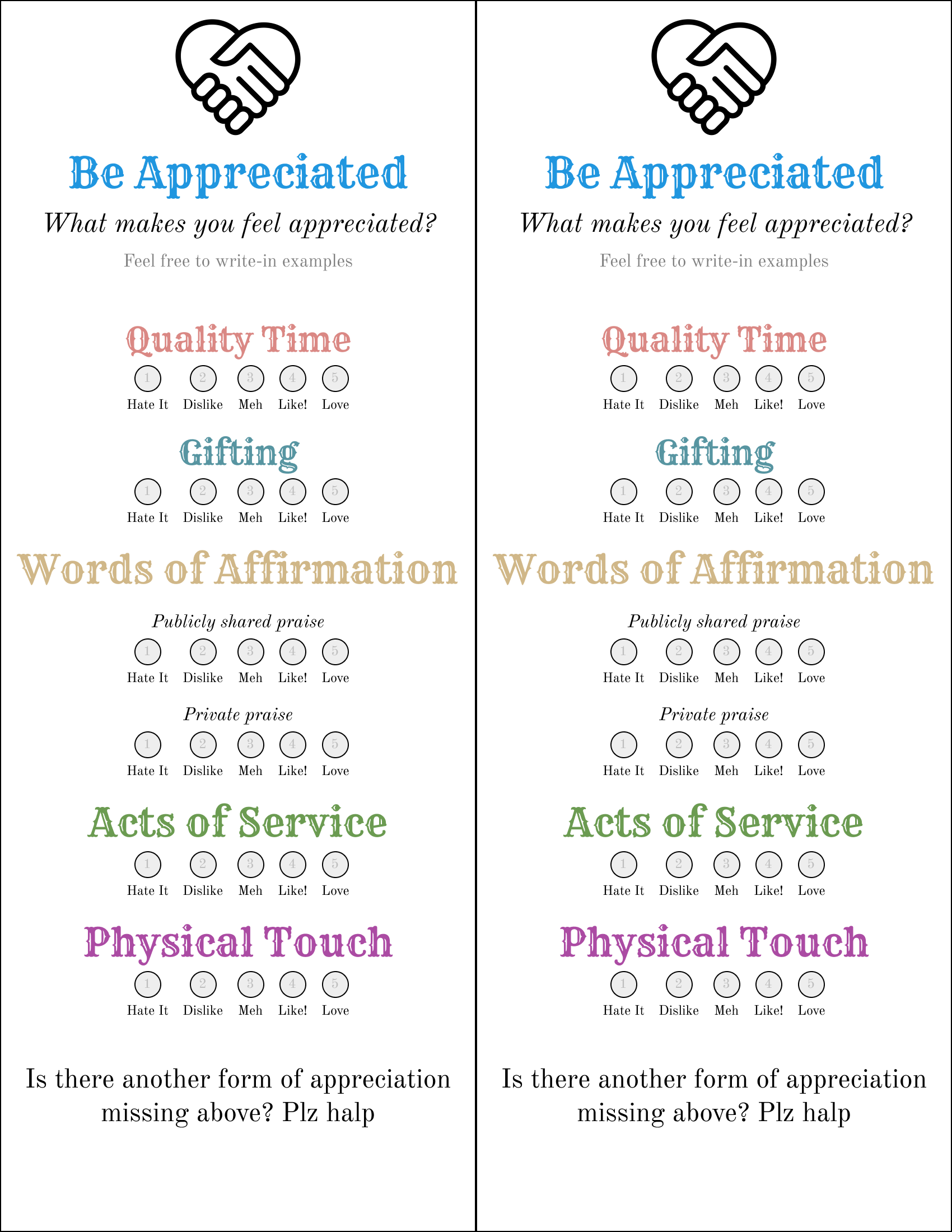
People respond to appreciation in different ways, but most people will do more work better if you give them the right kind of gratitude. Which variety should you give to which people? Our attempts to survey showed that it's really hard to tell! Some management books suggest you determine this empirically per person, keeping notes about each!
At some point, Sophie and I put together this survey based on Five Love Languages For Work. It turns out this survey was weak; people don't know what they want, the categories here aren't relatable, and not all touch or all gifts are welcome. The only clear finding is that gofts and public praise got the lowest scores, which is hard to believe.
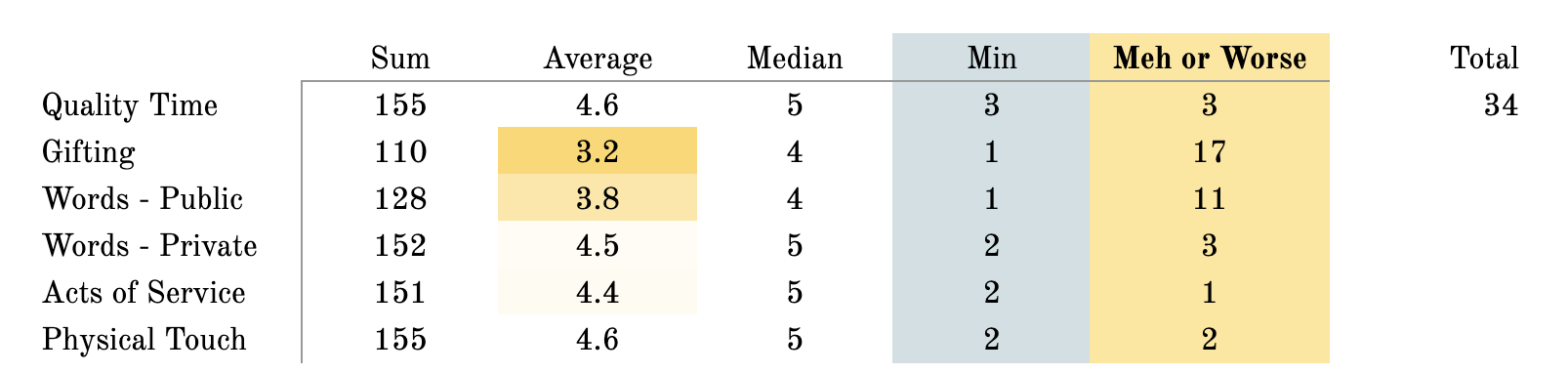
- The credits. Some people want their name listed in the credits. More often, they just feel hurt if their name is not in the credits! This is basically free, though you can get into trouble if everyone is listed as "Artist" and some people did 10x more work than others. I have no solution here, but if you try hard you can probably make a deal that works for each person. This is another management stress but credits are also critical for some people, such as those motivated by glory. Ideally, everyone loves their title in the credits, and you publish it on-site as well as digitally post-event.
- Photos. Some people want their face associated with the project. They also feel strongly if the right other faces are not included. Ideally, everyone is in the group photos, and the group photo is in the public album. I hate group photos so often skip them, and this pisses off my team. So I learned this by doing it wrong!
- Quality Time. Some people want quality time with specific people on the team. This can be low stress, if you organize the work of art so that they are spending time with that specific person. It can also be high stress when they all want to get quality time by bullshitting in the DMs and asking questions that are already answered in shared documents. Pick your battles.
- Group Meals. I'm awful at this too, but many people want to eat in a large group of their teammates. It gives them warm fuzzies, but those who want this most are rarely willing to organize it, and will try to pass that stress to whoever seems to be taking on the most stress already.
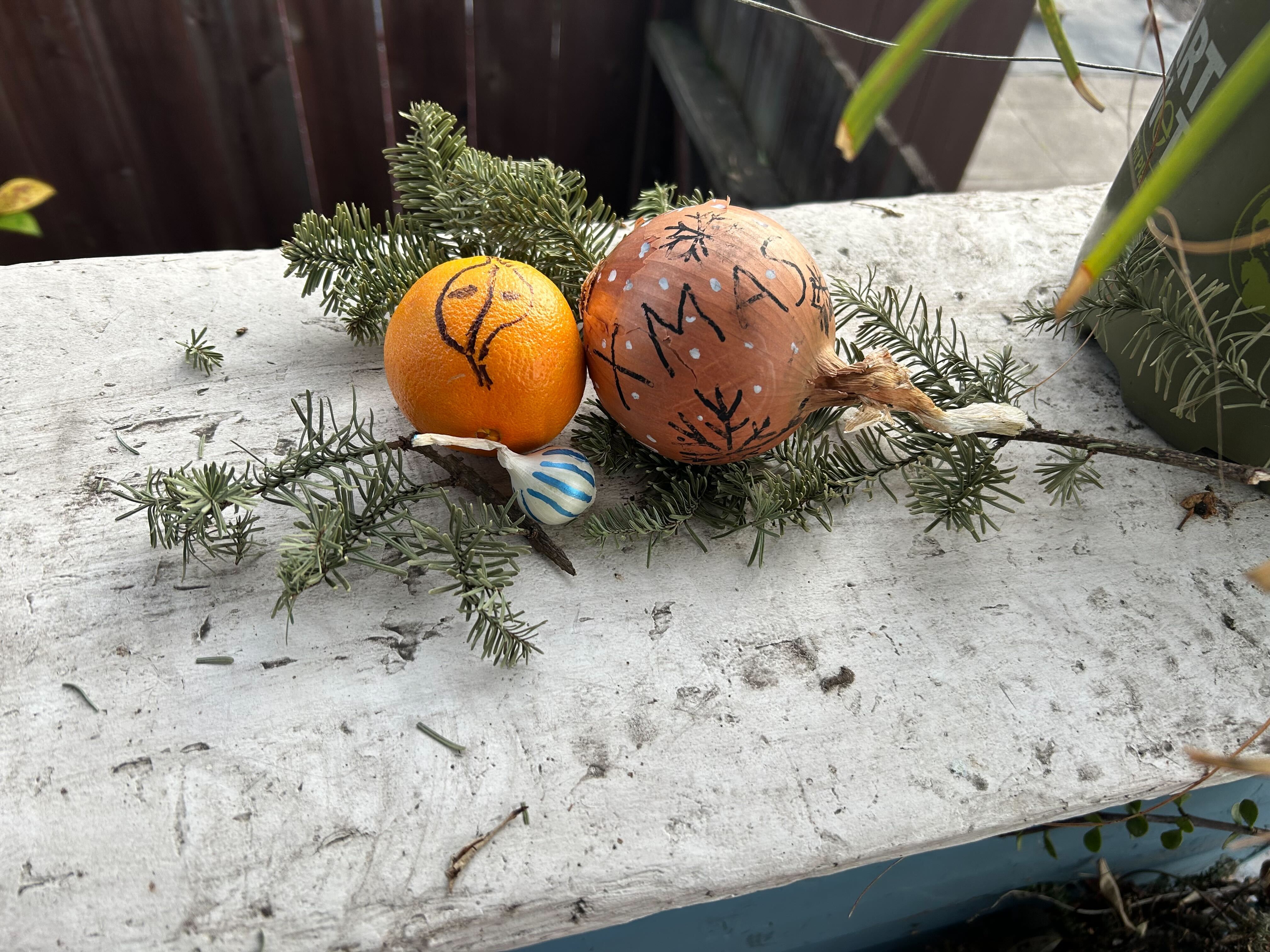
- Gifts. Many people want a thing, but they want different things! A hoodie with the team or project name is pretty safe, as are stickers with your name or mascot. Some want free meals, but only under certain conditions they often cannot describe. Some want handmade gifts, others do not. It's hard to land the perfect gift, but each successful gift given to a person who cares can get you quite a bit of loyalty and goodwill, so this game is usually worth the stress. Also, if you mess up, no one is mad at you. We tried a funny one this year where we actually delivered deranged Christmas Crafts to collaborators. You often want to hit the right emotional note, without the gift being too useful (might not match their needs); so experiences are often the best.
- Love from the crowd. Great news! The art crew makes art for the crowds, and the art is supposed to be crowd pleasing! So if they do the job right, they will get this on their own and no management is required! It's really yours to fuck up. Don't hide the team away; encourage them to be present and receive praise! Do mention their name often. Do give them the spotlight sometimes.
- Respect from Respected People. Some people want to be a "big deal" to other people who they think are a "big deal." It's face work. I don't have this one down yet, but organizing get togethers where Respected People will be is a good way for your collaborator to meet their hero and get the compliment they always wanted. When Famous Person says "great job" to them, they will have more willpower to offer the group! For me, people love it when I mention their name specifically when discussing a collaboration we did. "When I worked on this, xyz was interesting" they hate. "When I worked on this with ABC, xyz was interesting." I think the dynamic here has to do with respected people within the group.
- Give glows. Not my style, but I've seen crews last for decades on the back of one shiny person who corners people, one at a time, to hold them, look into their eyes, and explain how amazing and unique they are, using specific examples and inspiring words. Another fresh style I admire is to throw an explosive glow at the height of the action, shouting "I fucking love you people so much!" I personally find "words of affirmations" manipulative, but they say flattery will get you everywhere. If it's not stressful for you, go for it! Many people like this a lot.
- Praise. Giving praise is nice, though I'm not convinced it has much impact long term. It's also fairly weak short term, but for many people with solid social skills in acting nice, it's free! Public praise and private praise can each work, though the management literature teaches us that some people don't like public praise, I haven't run into an issue with this myself. The most important aspect of praise, in my opinion, is that if you never give anyone any praise, your people will definitely lose motivation. Some is mandatory. I recommend a steady diet of some praise, usually directed to the particular thing they did rather than as a comment on who they are.
The Right People
People care a lot about who is who. By tracking this, you can do better.
Names matter more than the project. Give them a compelling list of who's committed. They gravitate towards certain names for many possible reasons: crush, admiration, deep friendship, or they just know their friends like this person.
- Names matter more than the project. Give them a compelling list of who's committed. They gravitate towards certain names for many possible reasons: crush, admiration, deep friendship, or they just know their friends like this person.
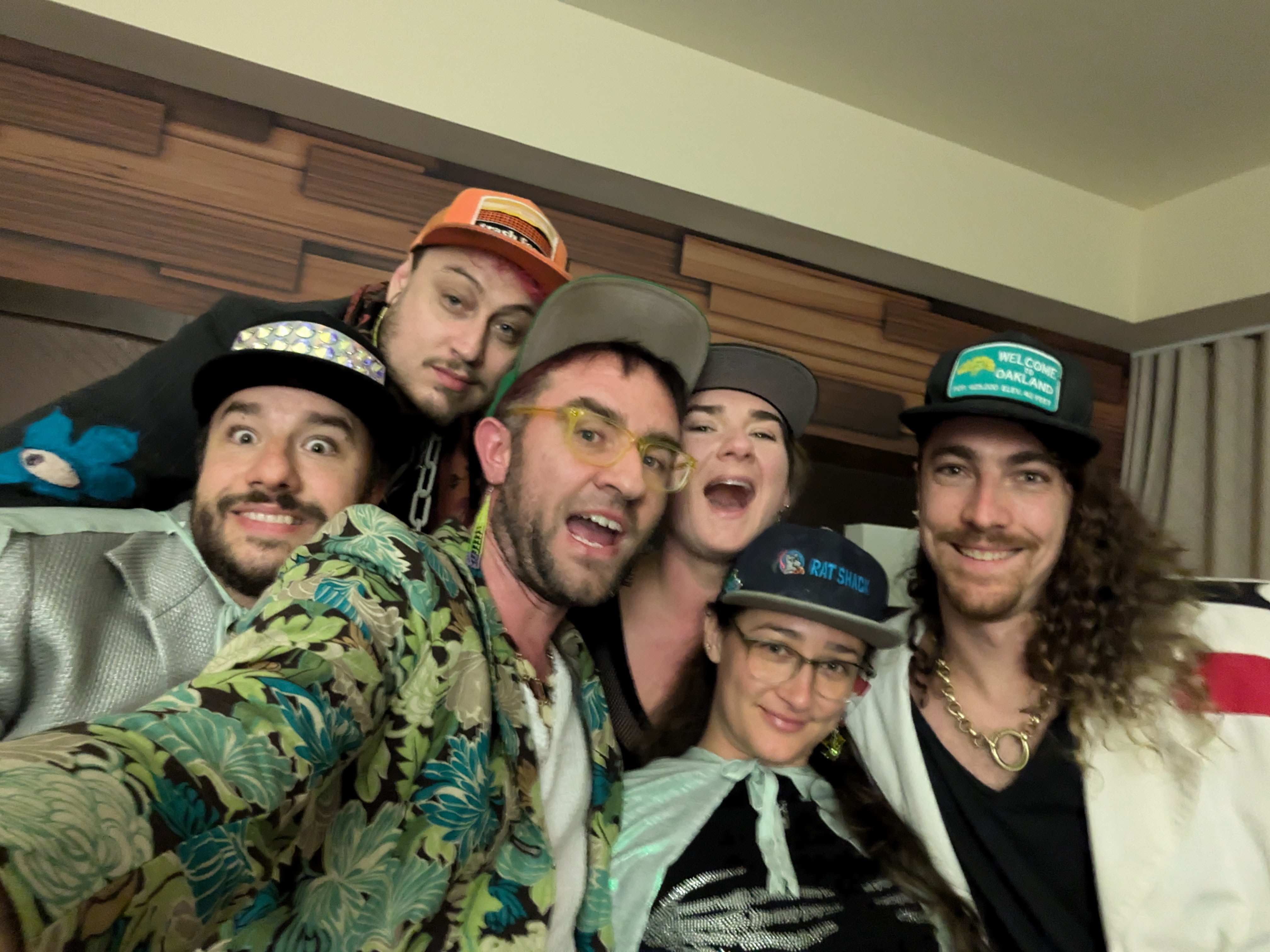
- Group bonding is a good investment. Ideally, your team is happy to be around each other, even when there's no art involved. Keeping the pack together is a lot of work, but makes you a powerful gang. Choose activities, invite people, and coax them into joining up. One art crew lead described their team as "a drug crew with an art problem;" they saturated the team with bonding and then directed the extra energy into art. Many excellent artists skip this step, but it's critical for retaining a crew.
- Factions rule. Strangely, making a faction is very effective and one of the dominant strategies of top crews. They are weird, in a similar way, so it's hard for other people to relate to them, which makes them more attached to their own people. This also makes them attractive to outsiders who are looking for the Next Big Thing in their life. It also means outsiders "don't really get it" so your internal narrative is the only way to imagine your work. The strongest magic, though, is the hard-core buy-in from insiders who are now way past typical "hobbyist" motivations like "self-expression" and willing to stay up all night, truly sold on the cockamamie goals of the faction. Management literature looks down on cliquey empire building, but they are aiming for consistent, mediocre performance, from large numbers of people. Art crews need people who will turn it up to 11 for a few glorious days and deliver something no one before imagined. Really, the point is to have fun and accomplish something exciting.
- The wrong names drive people away. Including a single wrong person may scare someone off the team. Some folks develop a really long shit list over time. This isn't necessarily their fault, but it does become your responsibility. You may choose to exclude one person to keep another, but this often isn't worth it because you just lose both. From the perspective of this essay, it's axiomatic that you should not exclude your best contributors, because the goal is best outcomes for the team and they help with this. But, if they're really driving people away, you have to give them the boot. It can be sad.
- Coax them to connect. Pointing one person to another together is part of the secret job. You need them to like or respect the other one enough to try. For example: one artist wants a sign for their subproject, another person has offered to do all the signage. You refer the artist to the sign boss. Do they like the sign boss? If so, they reach out and sign gets made. If not, they won't talk and no sign is made.
The team as a whole has such different preferences that only one or two people get universally respected or liked. This concentrates stress on those few people—they become the only ones everyone will actually work with. In the sign example, if the artist doesn't like the sign boss, guess who's got to hop in? This person will now have to talk to the artist, getting a full description of the sign text, vision, style, size, substrate and pass this on to the sign boss, usually at the last minute after the plan A already fizzled. So stress accumulates on the universally liked person.
Being the universally-approved person can be really nourishing, so I tend to find someone else who plays this role and support them. I call this role the "talking animal," inspired by Gurgi from the Black Cauldron, who wasn't really good at much of anything but was damn cute and nice and everyone liked him, which helped the team stick together.

Worknights
Everyone on the team wants to come together and do cool shit together. They'll settle for a hangout, and most situations will devolve into just that. But they really want to be productive, without having to take big risks or do things that are uncomfortable.
- Simple projects. The group will meet again and again, working for hours, if they have something straightforward that they can do sitting around with others. Hot glue beans on all these things! Paint little designs on all these bottles! Use these cut onions as stamps on this fabric!
- Set it up for them. Can be stressful, but determine the entire project, secure all materials, establish the technique, find a host, and then set the people to work! They really can get a whole lot done, provided you do a whole lot to set them up for success. Do not just invite them over and say "maybe we could try making a board game." Honestly, this is a whole new level for your artistic process, because you have to plan a project where friends can hop in and make a contribution just for fun.
- Bully gently. Keep some discipline by checking in with people who are idle. Keep people on task, approximately. Make the next idea seem really exciting. Round them up and tell them what they're doing. "We're going to playtest this game" works better than "maybe this game could use some playtesting."
- Limit choice. Don't offer a bunch of things they could do. Just give them one thing. Unless they say no, then you can try another option.
- Be a good host. Be welcoming, offer drinks and inebriants, provide food, play music, adjust lighting, provide work areas.
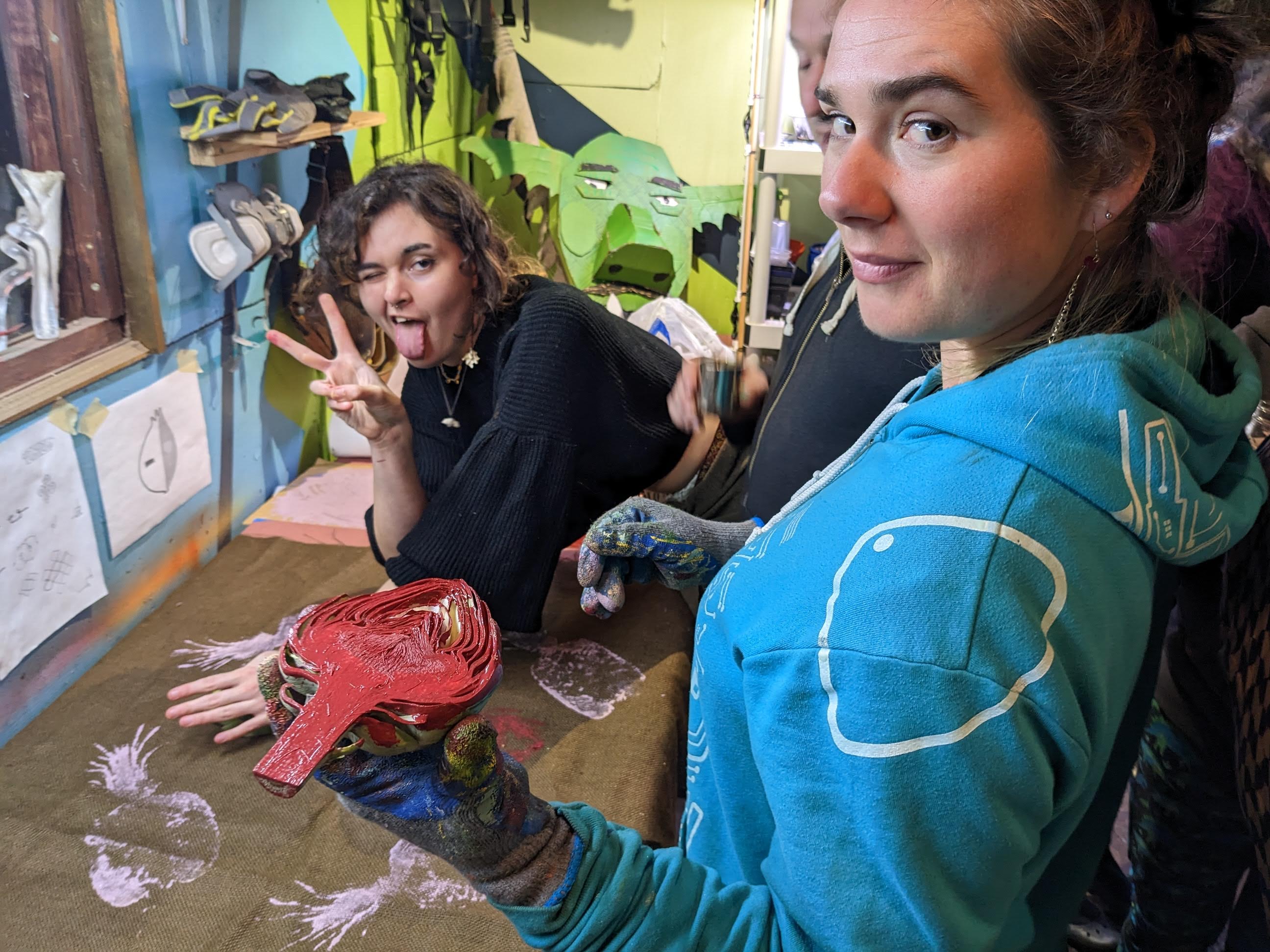
Worknights can be useful for producing art sometimes, but they're essential for team bonding. People who go to several worknights understand more, can take on a bigger range of responsibilities, know how to fix things that aren't working, and offer confidence and cheer that others need. People who haven't been to any worknights usually complain that you failed to include them enough and that they aren't ready to play and that you are a bad lead (and perhaps a bad person). The rest of the team will feel confused about them, which is bad for cohesion. Worknights should be fun and one of the main points of the whole endeavour: it gives you something fun to do on weekdays throughout the year!
Crunch Time
It's easy to miss this bit of psychology, when it just happens naturally, but the hardest moments you experience as a team create some of your strongest bonds. When the truck arrives at midnight and you build until 3AM. When the structure topples over and you have to rebuild it. When no one's slept enough, but the whole project has to be packed in 3 hours. When the event is in a few days, but you'll have to stay up late every night until then to deliver on the scope you promised.
Crunch time works well when:
- You keep it high energy. Crazy antics and extra yelling? Loud club music? Sharpie tattoos? Yes do it all.
- Cheerlead. Offer encouragement of all forms at all times.
- Stay strong. Buff the team with energy to keep them going, in the form of coffee, whiskey, or whatever else keeps them going.
- Be nice. You let people take breaks, don't shame them, and don't micro-manage them. Invest in team morale, because if everyone gives 100% you can do this, but if they start bailing the work will burn out those who stick around.
Then relax together! You've earned it! Part of what's fun is taking on a ridiculous challenge that uses you up completely. Bask in the glow of accomplishment and help each other feel magical sparkles that you did something greaet.
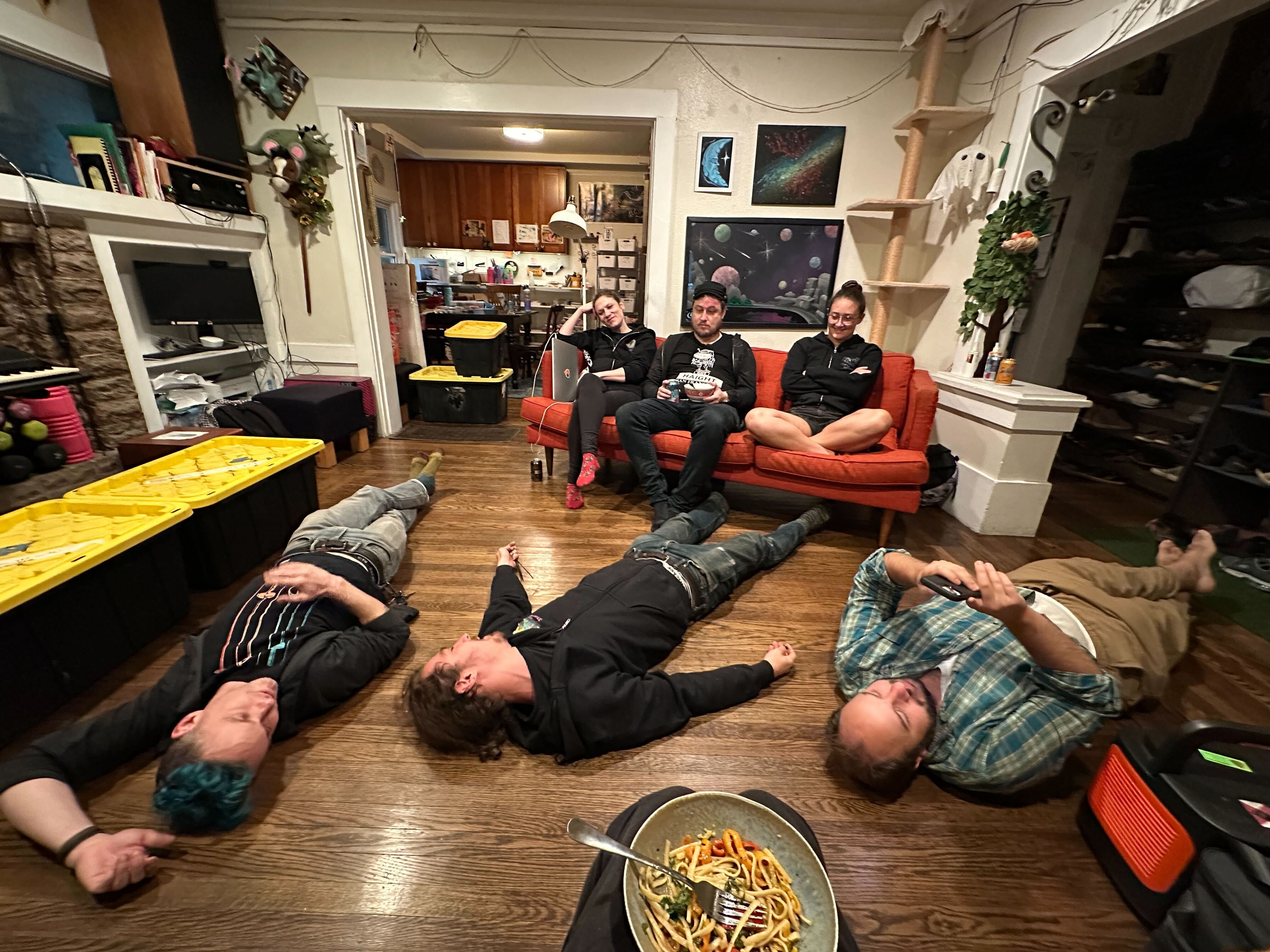
Your immediate goal is important and nailing it will make your team happy and proud. But the long-term effect is even more important: make the team believe that they can accomplish anything if they work together. Ideally, you will always plan things so they aren't too stressful and you'll never face a crunch time. But, when life happens and you've got lemons, you can make lemonade by using the trauma bonding to strengthen the team.
The Levers Don't Have to Be Intuitive
Developing this content, I realized that most people find it off-putting that I don't find these tactics intuitive. They think I must be mad to deliberately learn and experiment with glows or discounts or trauma bonding. But it's part of being human to discover things you don't yet understand. Your big opportunity is to learn and grow so you can co-create an agreeable harmony with people and practices around you.
These opportunities for social engineering don't have to be intuitive for you to use them.
What Motivates Each Person
Everyone is unique, but you also can usually find some success treating them via an archetype, for certain purposes. Here are some archetypal reasons that someone wants to work with the art crew
Pure Motivations
- Access to the event or scene. This person is new to the scene and doesn't have another way in than your group. That's great and they will do about as much work as they did for a class in high school, since that's just what they're used to. This works great for overachievers. After a few months, they won't need you anymore for access and may leave.
- They want to work with a specific person on your team. This can be good, but often they struggle integrating, as they only have eyes for one person. Keep them on a single big subproject.
- They want to make art right now. This is your textbook "passion for art" motivator and you should use it as much as you can. In reality, it often means their partner is unavailable or no fun right now. Until they break up, don't piss off the partner and you can keep the contributor who will have much energy for you!
- They want freedom and joy and belonging. These are great, but by themselves typically mean the person is a better match for the party crew than the art crew. The party crew buffs the team and is great to keep around; someone just has to limit how much they derail productivity because they do not care about project results other than having fun.
- Pride in accomplishment. This is ideal, but works better for a scripted mega-project than a small or medium sized sandbox project. They want glory, so be sure they are in photos and in the credits. They may also want fame, potentially to advance their personal life.
Romance and Intrigue
- They are dating someone on your team. Typically, this reduces productivity for your existing team member, but, with luck, you can nurture it into a happy couple who are both really into the project. More often, they will stick around and you can never refuse them, even if they are a net negative for the team.
- They are dating someone on your team and always work together. This is the most powerful connection and can transform everything around it. The group has to handle any rockiness in the relationship, but also benefits from the devoted time, effort, and care that the couple would otherwise be expressing only for each other. In co-ops, this is sometimes called "House Love"
- They have a crush on someone in your team. This is ideal, because they will try to hide their crush and sublimate effort into creative expression and consistent labor. There's no actual relationship, so you won't deal with rockiness until they try dating.
- Escape from a difficult relationship. This is sad for them, but great for your team. Even an ok time with you is great bliss compared to what they have at home. They will have a high tolerance for pain, which is useful. They will probably leave you as soon as their dating life shifts.
Part of the Pack
- Their roommate is involved. This is very useful, because they will join up often. If they are really bad for the team, you can't cut them.
- Their friends are involved. This often just gets you a groupie, because they are there for the camaraderie but not the art work.
- Being part of the team. This is a lovely motivation, though it usually pairs with another one. If the person is responsible and attentive, they will also see the secret job and work to make sure the project is a success. I'm surprised we don't see this motivation more often, but the Bay Area is rich with opportunities so we have to compete hard for anyone's time.
Conclusion
The secret job exists whether you like it or not. No one person has to do it all. You can all improve at some techniques. You can even make up new techniques! That's how I got here!
The goal is not to go from a "leaderless" organization to one with a single perfect leader. The goal is to become a "leaderful" organization, where more people do more parts of the secret job. Having autonomous leaders in every role on the team is really the dream.
Too often, as one person starts to see the secret job and worry about how to get it done, they grab control and hold it too tightly, disempowering teammates. They question other people's work, try to go around them, and generally hurt their feelings quickly and make themselves more alone with the crushing weight of the secret job all on their shoulders.
Instead, you must learn to distribute power, through delegation and following other people's lead. Check in with a light touch. When someone does a part of the job, let it stand on its own as much as you can.
Sharing the secret job is great fun! It can be hard to learn to trust people with it, but when you do, you'll find they become some of your closest friends.
Avoid the Death Spiral
Quite often, a good project gets you groupies. The balance of activity shifts from making a cool project to hanging out with the groupies. Soon the group regresses to "a few guys with coolers" hanging out, heirs to the faded glory of thedefunct art crew.
Results matter. They get you reputation, which gets you talent, grants, and buy-in from other groups. Results build the "there" there that makes the crew worth joining. High demand to join lets you be selective in who you take.
With an art crew, you have huge advantages over most organizations. People actually want to make art. You're working with intrinsic motivation that is yours to nurture, or to accidentally fuck up completely. People want to have freedom and feel accepted for who they are. Support these things, and you can do more together than you could do alone or in smaller groups.
Respect the secret job. If you can do half of it right, you'll be a significant asset to any collaborative group. The work is worth it.
Works Cited
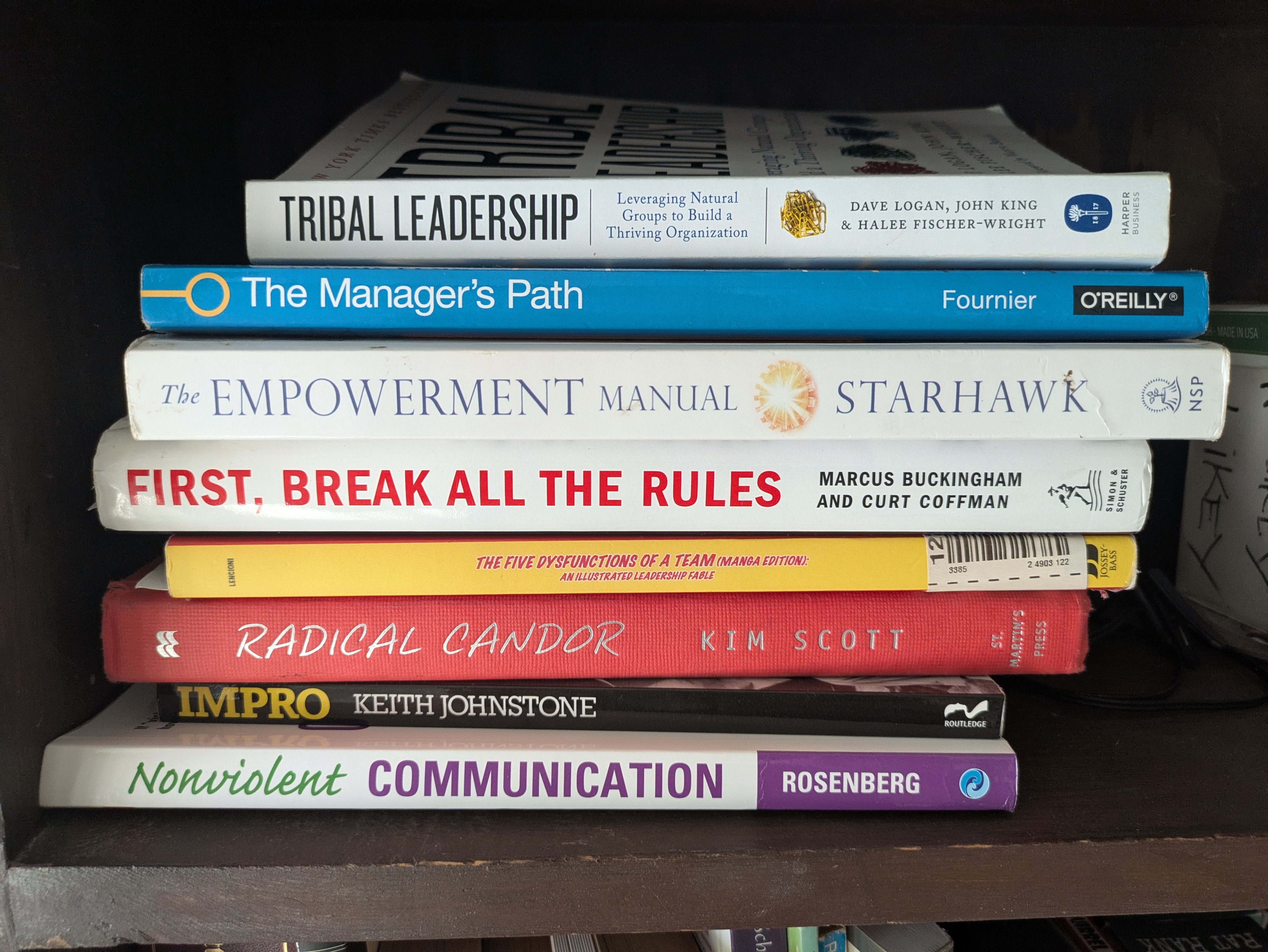
Books I read exploring this topic
The Empowerment Manual (Starhawk): Highly recommend book on leaderful organizations, how to make them work, and how to do better with them.
The Five Dysfunctions of a Team (Patrick Lencioni): Only "Attention to Results" really matters for art crews. The rest is good for understanding management leads of an organization, where commitment and trust have to be very high for good results.
First Break All the Rules (Marcus Buckingham): Match talent to motivation and anyone can be an asset
The Manager's Path (Camille Fournier): Best tactical guide; your productivity < team's productivity. Great content about typical emotional work and management level problems, such as good cop / bad cop, the brilliant asshole, etc.
Tribal Leadership (Dave Logan, Halee Fischer-Wright, and John King): classist and annoying, but shows how personal legacy is a result of team success, not an individual "winning"
Radical Candor (Kim Scott): Focused on keeping debate respectful, but art crews rarely need debate because they often don't need consensus.